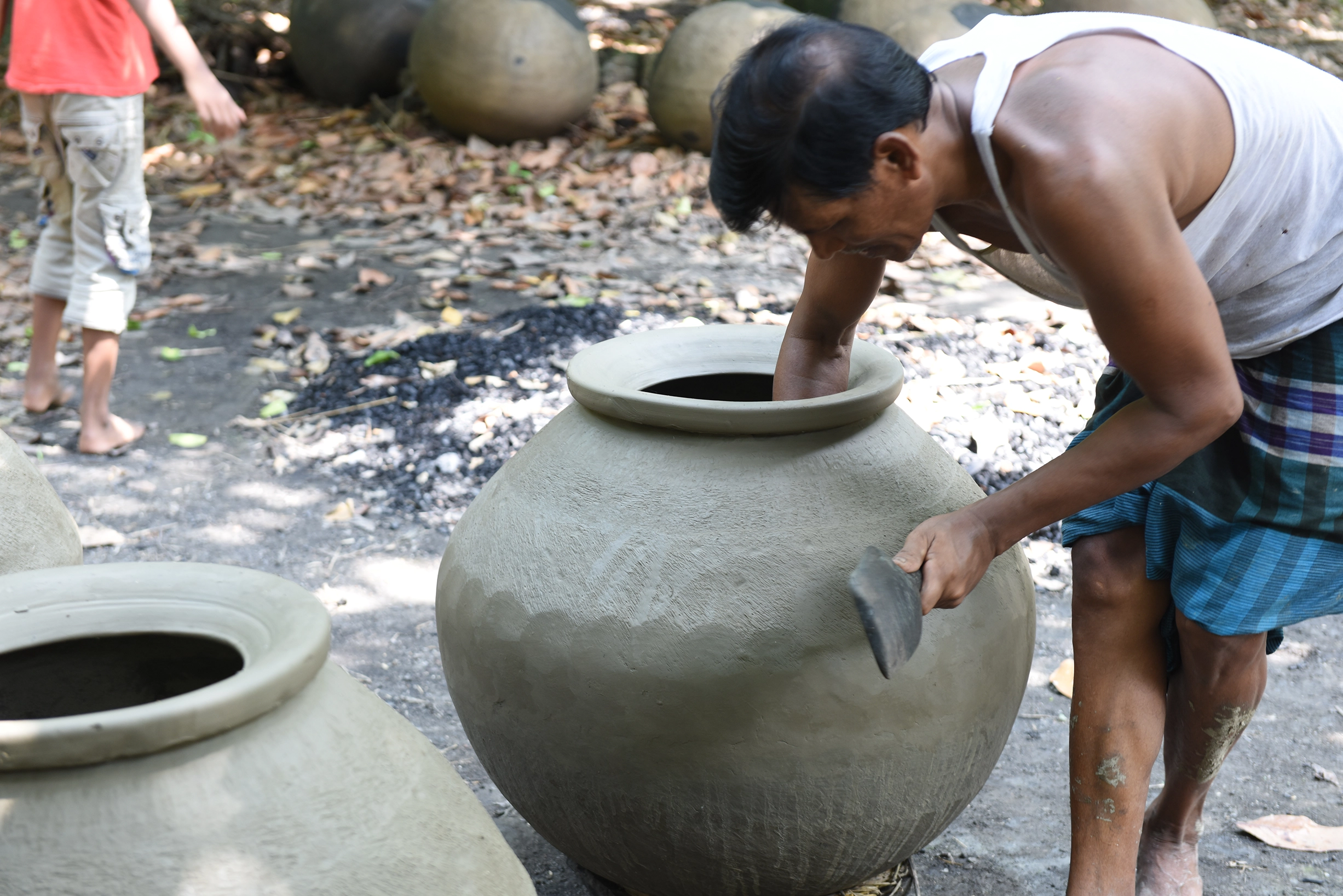
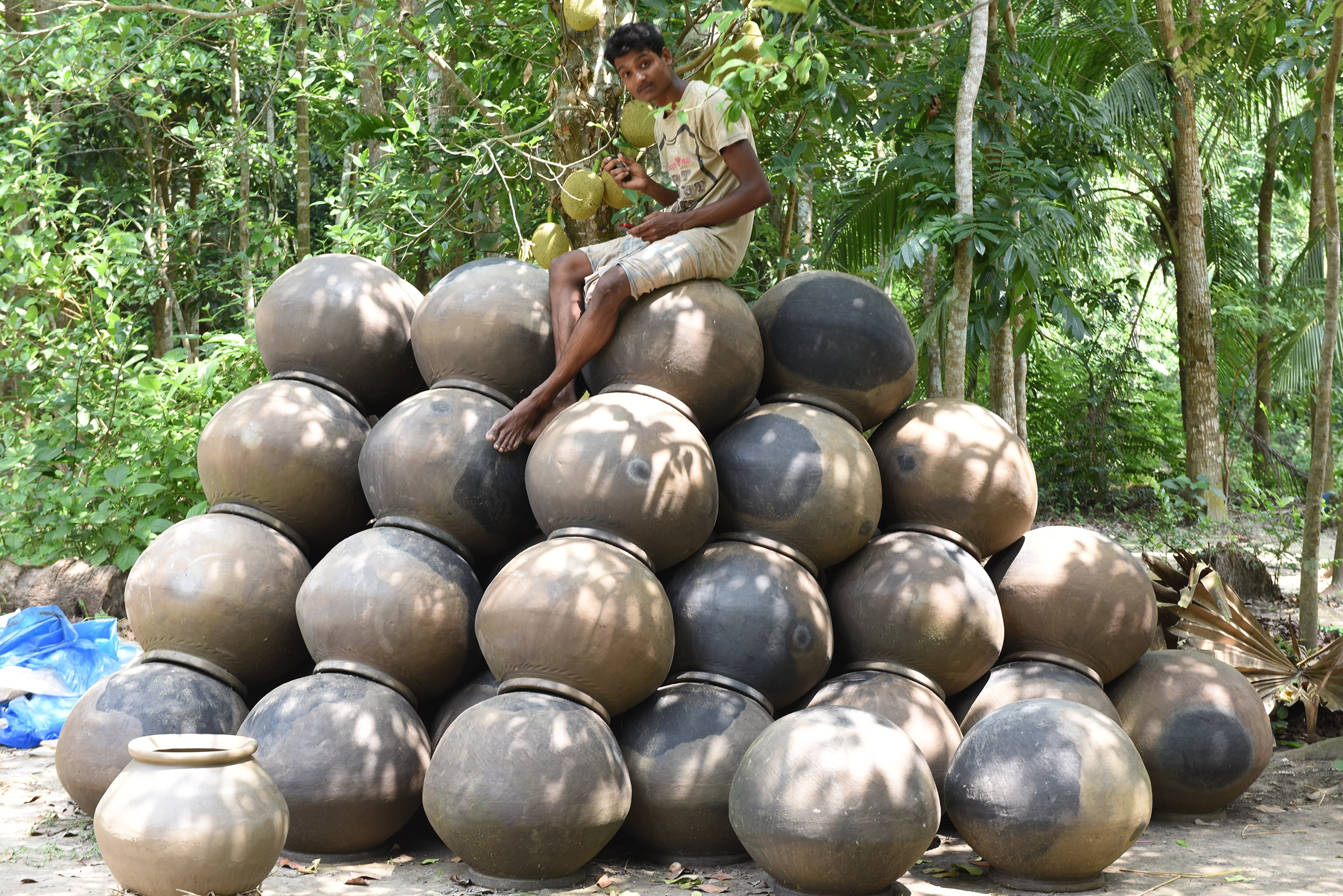
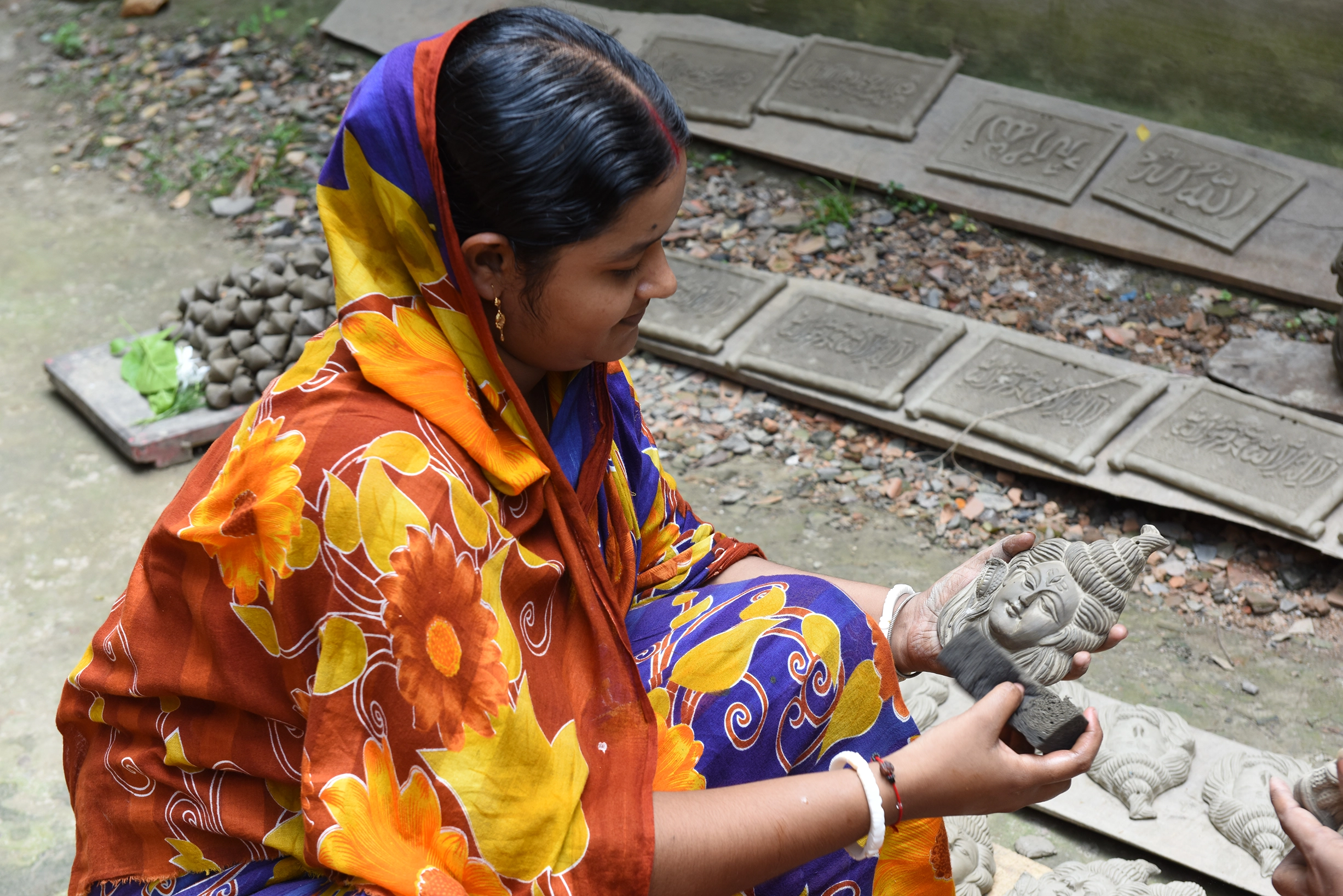
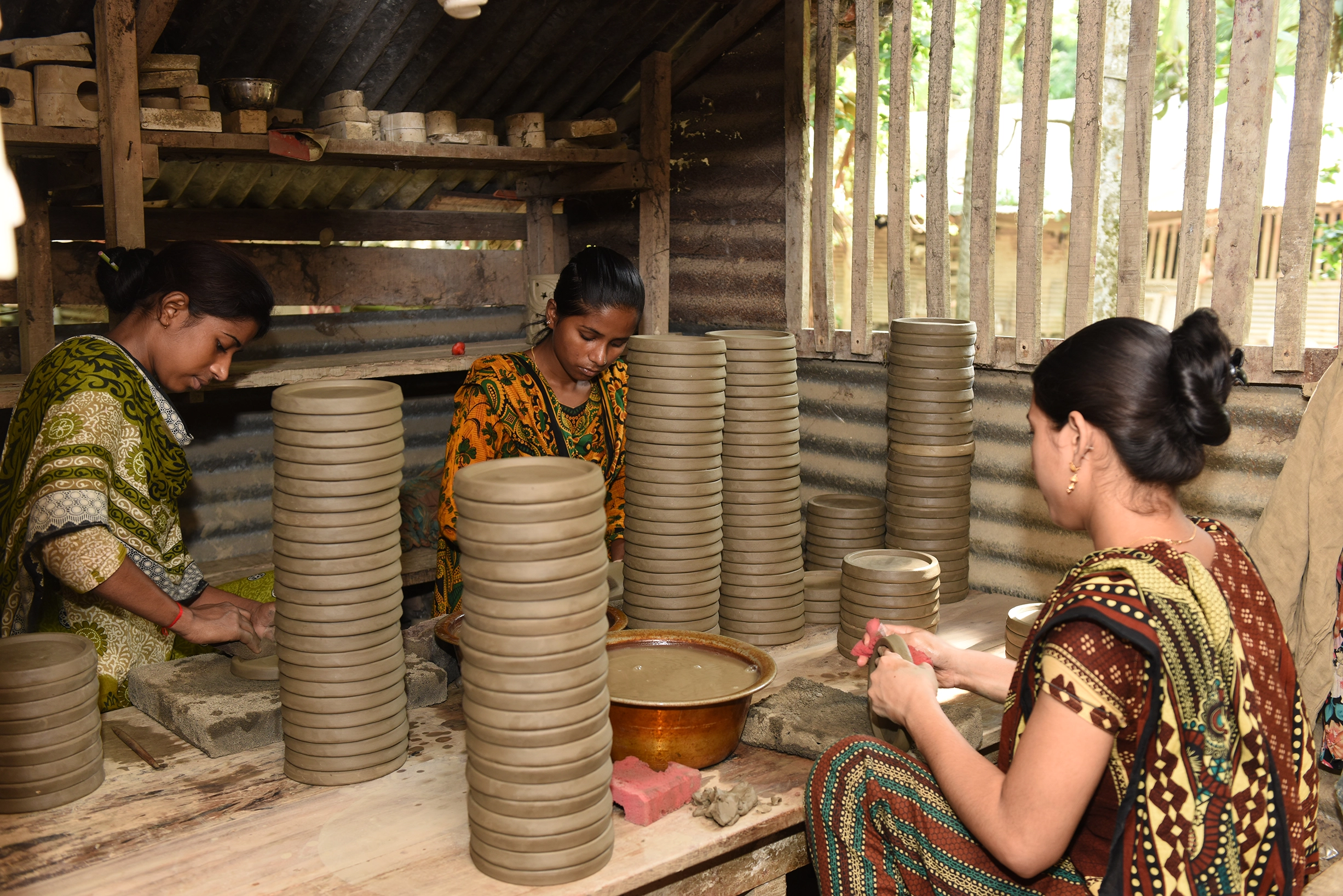
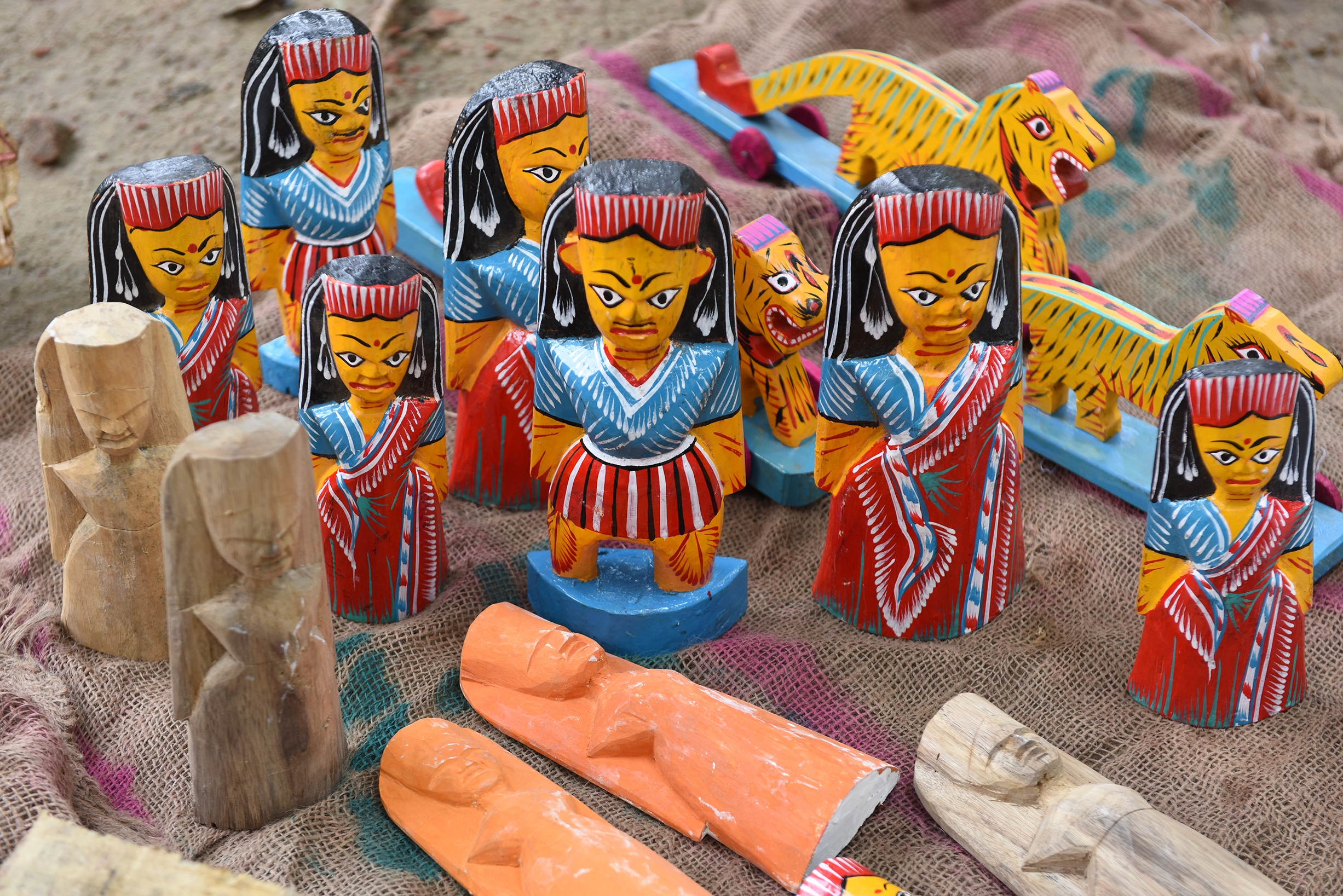
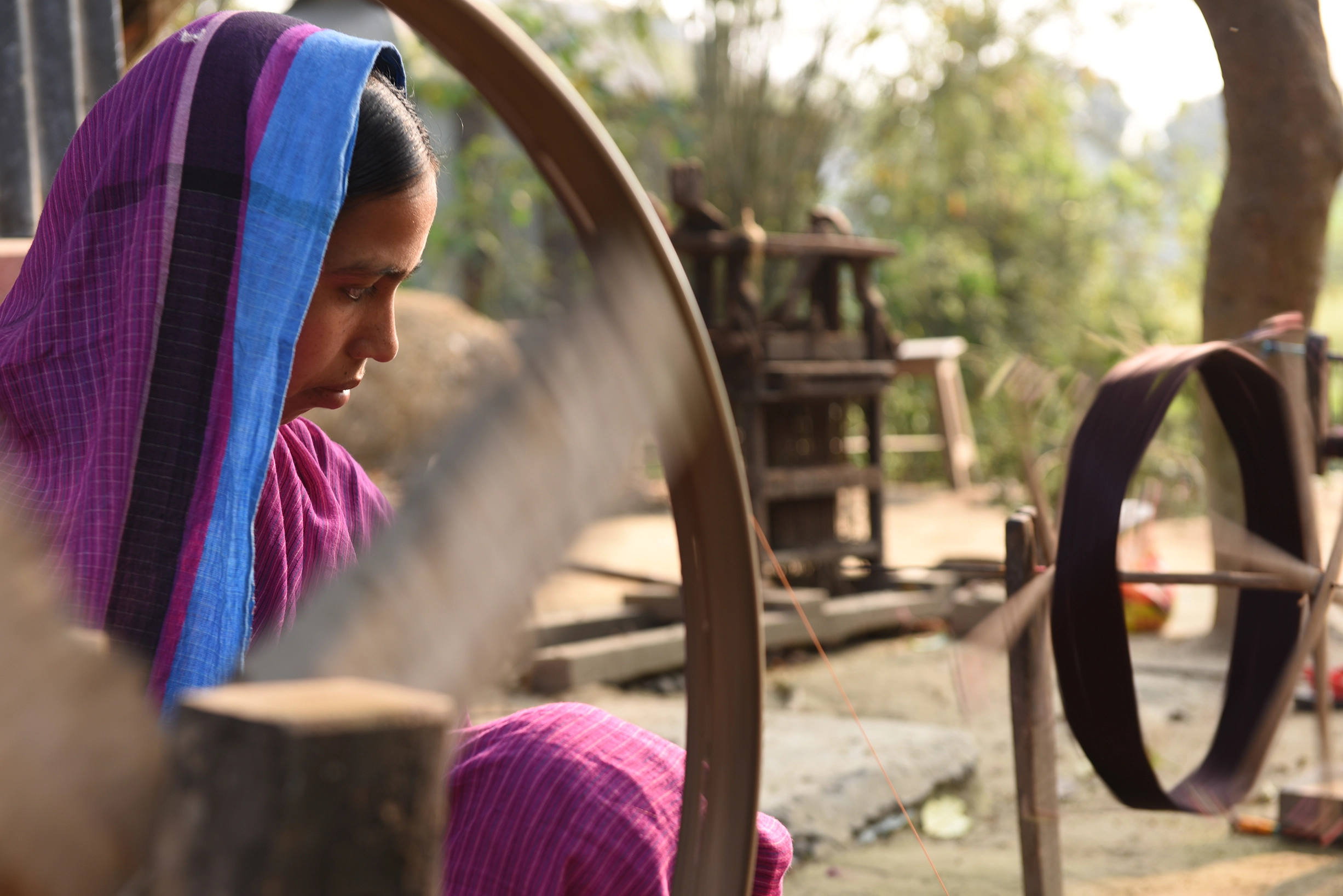
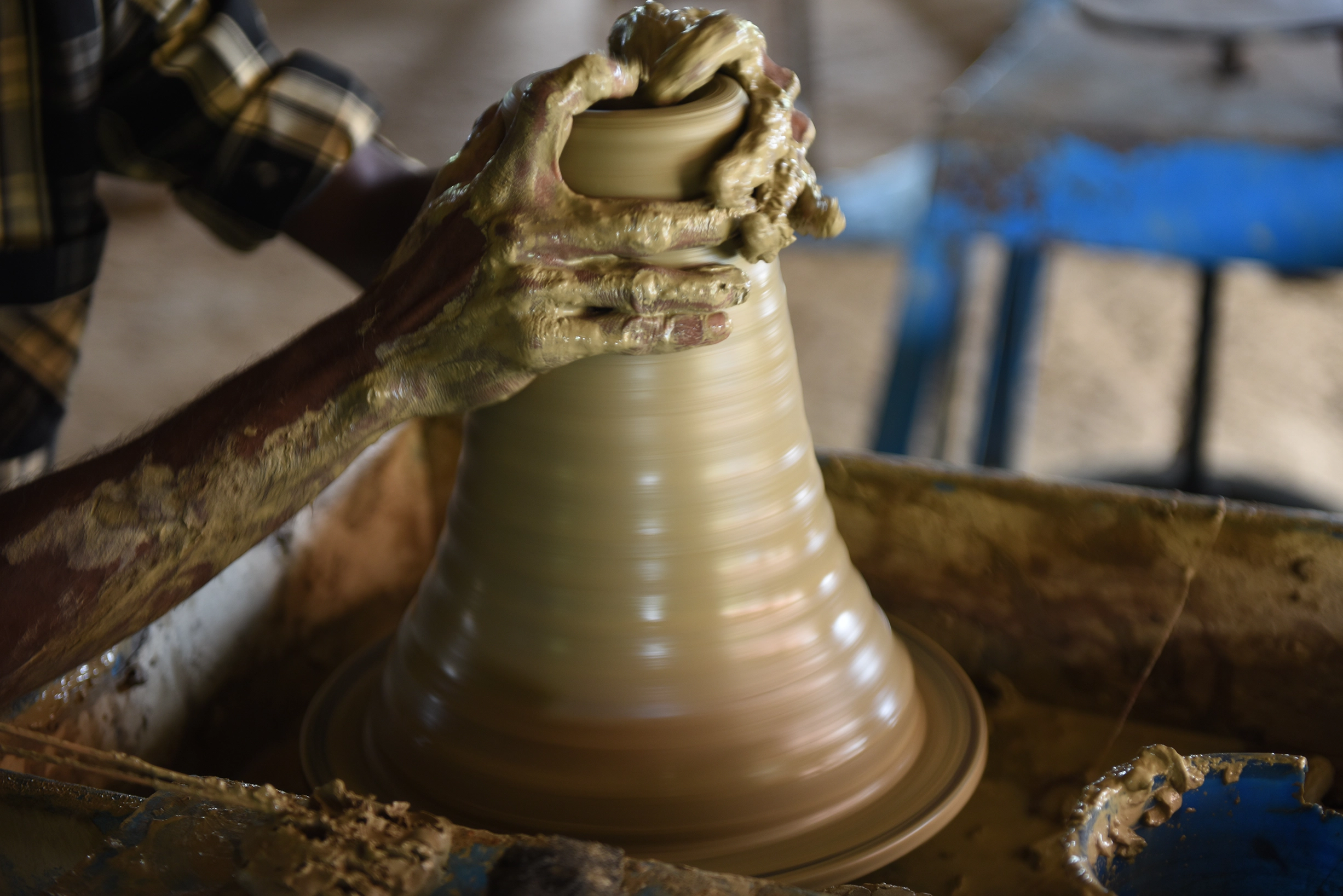
শরীয়তপুরের কার্তিকপুর গ্রামে গেলে দেখা যাবে লাল মাটির ঘ্রাণে ভরা আরেকটি ঐতিহ্য- মৃৎশিল্প। এখানে পাল ও কুমার সম্প্রদায়ের শিল্পীরা প্রজন্ম ধরে মাটি দিয়ে তৈরি করছেন হাঁড়ি, কলস, ফুলের টব, টেরাকোটা পুতুল ইত্যাদি। বর্তমানে গ্রামে কয়েকটি কারখানা আছে যেখানে প্রায় ৩,০০০ ধরনের জিনিসপত্র তৈরি হয়; টেরাকোটা শেড, মোমবাতির স্ট্যান্ড, কয়েন বক্স, ওয়াল পটসহ নানা গৃহস্থালী ও শোভাময় সামগ্রী। আশপাশের গ্রামের শত শত মানুষও এই কারখানাগুলোতে কাজ করেন; এনজিও এবং ব্র্যান্ডগুলো এখান থেকে পণ্য কিনে ঢাকাসহ দেশজুড়ে এবং বিদেশেও বিক্রি করে।
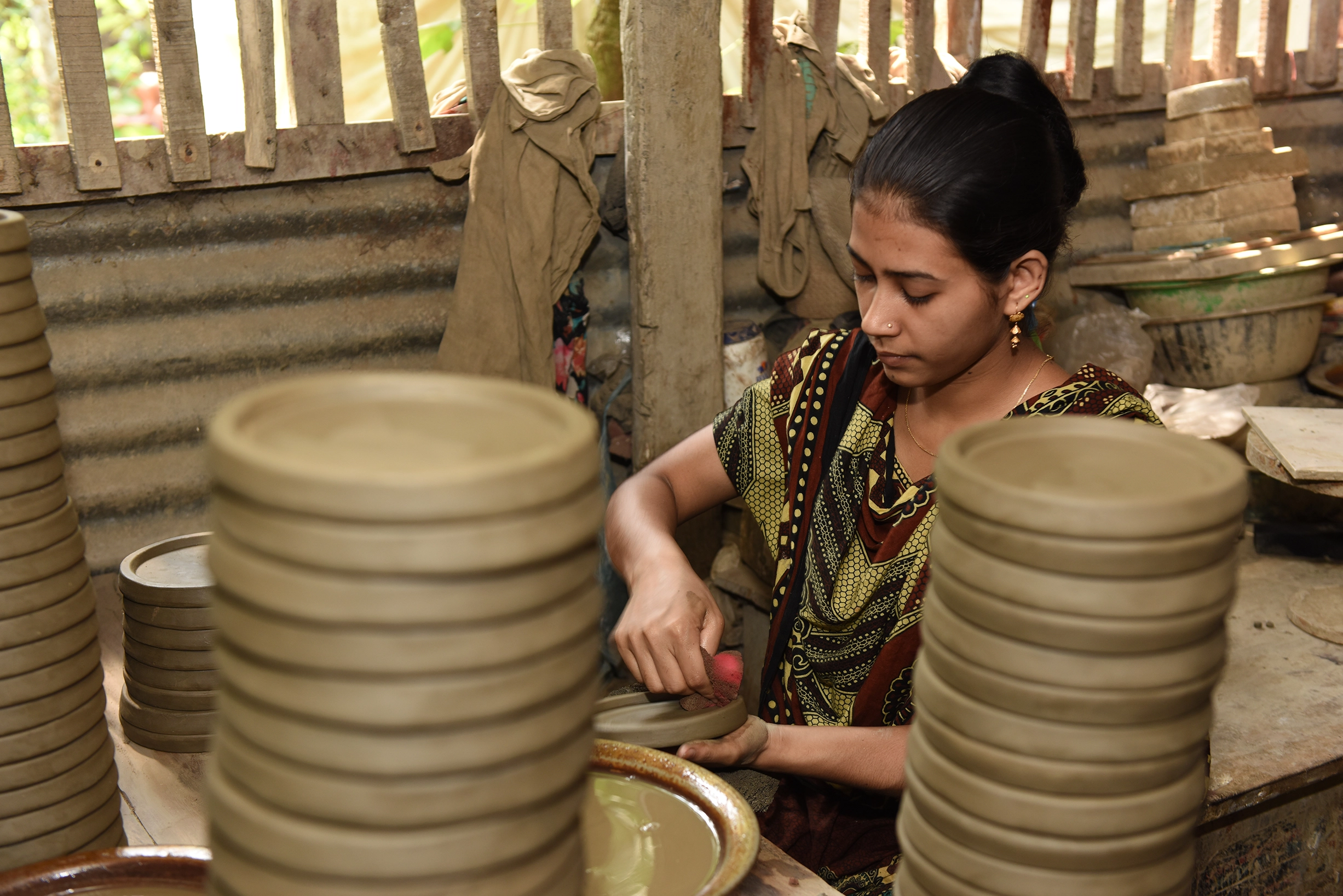
তবে আধুনিক প্রযুক্তির অভাবে, উদ্ভাবনের ঘাটতির কারণে এই শিল্পীরা ন্যায্য মূল্য পাচ্ছেন না। তবুও তারা পরিবার ও সংস্কৃতির টানে মাটি ঘেঁটে শিল্প গড়ছেন। আমার ক্যামেরায় ধরা পড়েছে তরুণ মৃৎশিল্পী পল পাটে বসে হাতে হাতুড়ি দিয়ে মূর্তি সাজাচ্ছেন, আর বৃদ্ধ কুমার তার নাতিকে শিখিয়ে দিচ্ছেন কিভাবে টালি বানাতে হয়। বাড়ির উঠোনে সারি সারি শুকোতে দেওয়া হাড়ি‑পাতিল দেখে বুঝা যায়, এই শিল্প কেবল অর্থের জন্য নয়, এটি তাঁদের জীবনের অংশ।
গ্রামের মাটির গন্ধ আর মানুষের হাসিমুখের ছবি তুলে যখন ফিরি, মনে হয় এই ঐতিহ্য হারিয়ে গেলে আমরা সবাই কিছু হারাবো। আপনি যদি বাংলাদেশের গ্রামীণ সৌন্দর্য ও ঐতিহ্য খুঁজতে চান, কার্তিকপুরের মৃৎশিল্প আপনাকে মুগ্ধ করবে।
Kartikpur Pottery: A Rural Tradition Shaped by Clay
In Kartikpur village of Shariatpur, Bangladesh, there is a strong smell of red clay in the air.
This village is known for its long tradition of pottery. For many generations, artists from the Pal and Kumar communities have made clay items by hand. They create pots, jars, flower tubs, terracotta dolls, and many daily use products.
Today, a few workshops in the village produce nearly three thousand types of items. These include terracotta shades, candle stands, coin boxes, wall pots, and other home decoration pieces. Hundreds of people from nearby villages also work in these workshops. NGOs and different brands buy these products and sell them in Dhaka, across Bangladesh, and even in other countries.
But the artists still face problems. Because of limited modern technology and lack of new ideas, they often do not receive fair prices for their work. Even then, they continue this craft for their family, culture, and tradition. Young potters shape clay with simple tools, while older craftsmen teach children how to make tiles and pottery. Rows of drying pots in village yards show that this craft is not only for money. It is a part of their life.
When I return after taking photos of the clay, the people, and their smiling faces, I feel something deep inside. If this tradition disappears, we will all lose a piece of our heritage. Anyone who wants to see the true rural beauty and culture of Bangladesh will be touched by the pottery of Kartikpur.